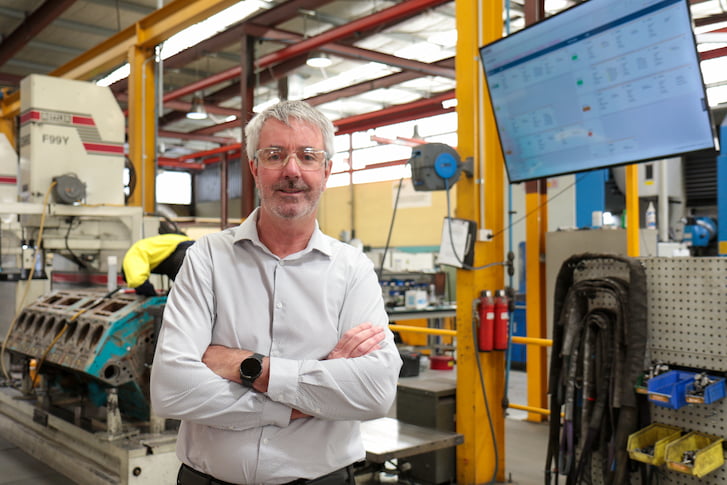
Proud 106-year journey for WA remanufacturer R. Moore & Sons
By Mollie Tracey
There are few Western Australian businesses that reach the milestone of operating for more than a century.
R Moore & Sons (RMS) is one of those businesses that has defied the odds by facing challenges head-on and embracing change.
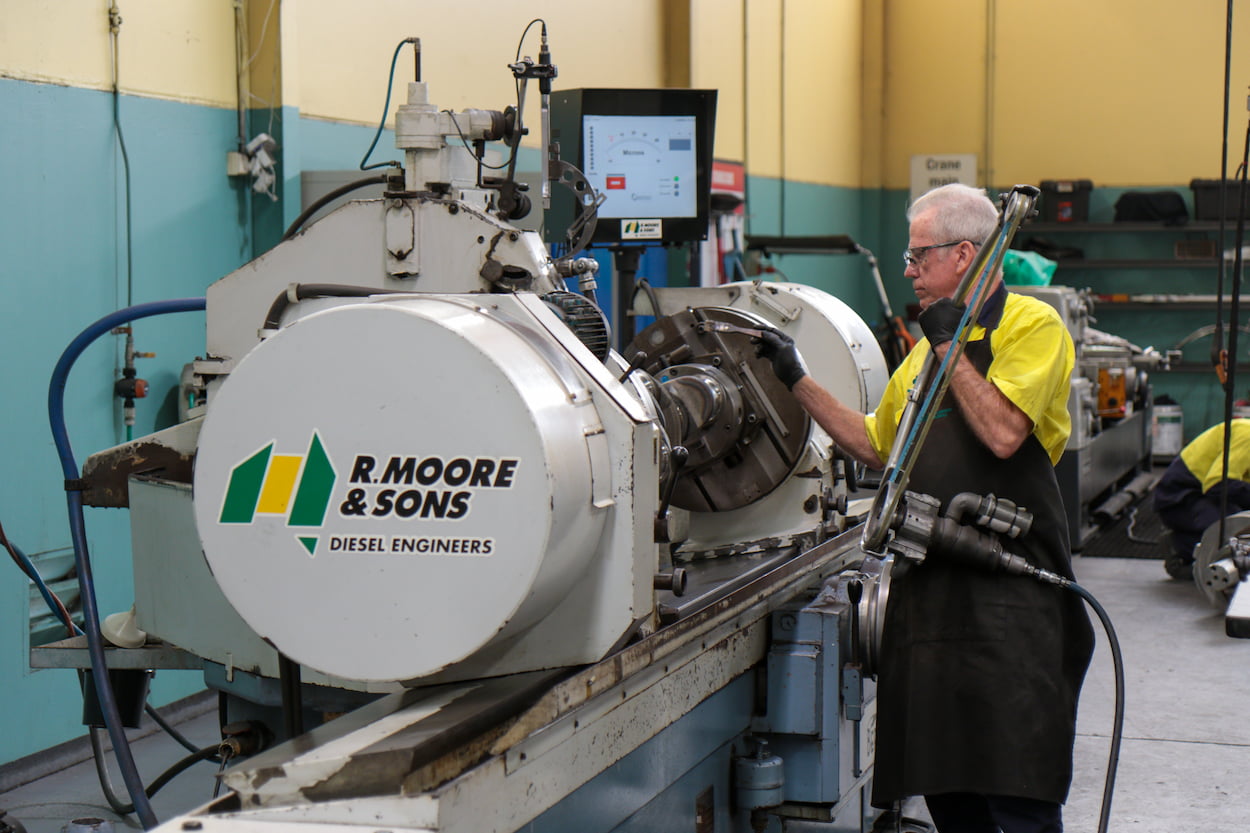
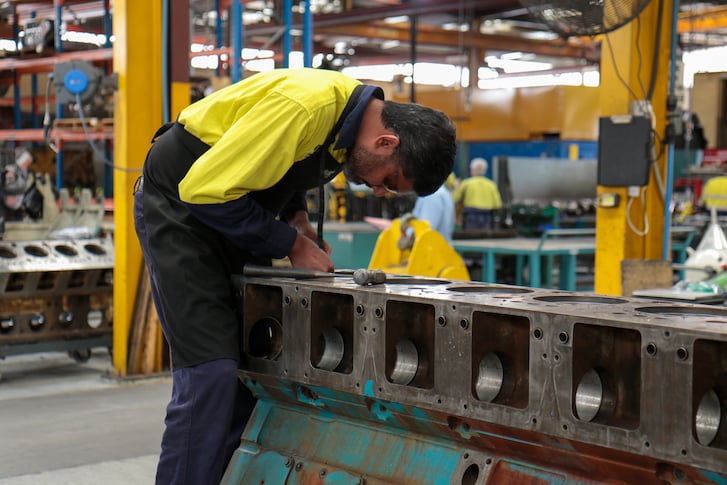
Kewdale-based RMS specialises in remanufacturing mechanical componentry for heavy industry, servicing industries such as mining, oil and gas, marine, energy, agriculture and defence.
“Remanufacturing enables multiple lifecycles of those mechanical components, so they can be reused over and over again,” says RMS Managing Director Stuart Davis.
Business born out of necessity
In 1898, 17-year-old Irishman Robert Moore arrived in WA. From a young age Moore had an entrepreneurial spirit and is still remembered as one of WA’s great engineering pioneers.
Moore, with wife Amelia, spent his early career in Kalgoorlie where his business ventures began, first as a hotel owner, then beverage manufacturer and later in transportation.
In the mid-1910s the family moved to Perth and Moore’s transportation business was doing well.
“Robert Moore had trucks operating around Fremantle but he couldn’t buy replacement parts to keep them running. So, he needed to repair and manufacture some new parts for his trucks,” Davis says.
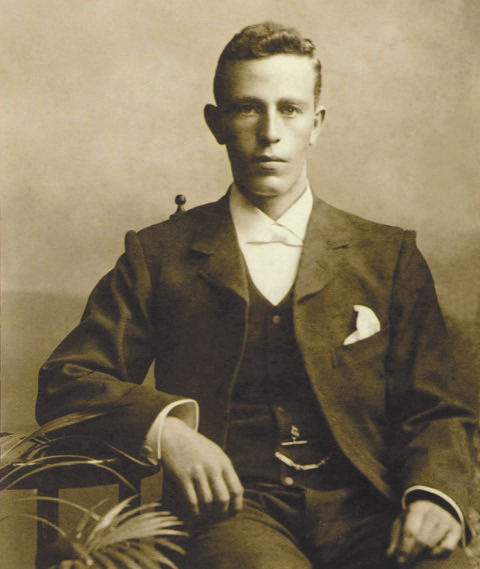
R. Moore & Sons (RMS) Founder Robert Moore, early 1900s.
“That’s how R. Moore & Sons kicked off – he started buying machinery to keep his trucks operating and other operators cottoned on and wanted him to repair their parts too. From supporting the transport industry at the time, the business expanded into agriculture and it grew from there.
“I am proud to be part of this journey – the R. Moore & Sons legacy.
"The way Robert Moore went about business in the early 1900s in such a challenging environment, we’re talking in the Goldfields, and didn’t have any of the machinery or equipment we have now. What he was able to do on so many fronts is really amazing.”
RMS survived the Great Depression in the 1930s as demand continued for tractor, car and truck parts.
During World War II the company was contracted to remanufacture components for the Australian military and US Navy submarines. Post war, demand from the agricultural and automotive sectors returned and RMS was able to retain its 50 staff.
Challenging the status quo
The business has transcended many changes throughout its more-than-a-century lifetime.
Perhaps the biggest changes – advances in technology – have occurred during Davis’ time with the business, having been with the company for 35 years, starting as a leading hand.
“Right from when I first set foot in this business, it was clear the business and culture was looking at finding a better way of remanufacturing items. I think the main reason RMS has been successful for so long is because we have always challenged the status quo,” he says.
RMS has continued to be at the forefront of innovation, and technology is no exception. In recent years, the company has invested to digitally transform its operations.
The business has digitised its workshop floor to utilise technology, such as sensors and a Smart Shop Floor System, to enable the team to make data-driven decisions.
“Digitising our business has increased our efficiency and quality, improved our throughput and is helping us deliver in full and on time to our clients because our targets are built into the Smart Shop Floor System, and we can detect any delays in advance,” Davis says.
Importance of positive workplace culture
For Davis, one of the most challenging yet rewarding aspects of running a business of about 60 staff is people management. He says having a positive workplace culture is crucial to a thriving business, and at RMS having open dialogue on the workshop floor is a key ingredient.
“One of the things I love about the business is having the dialogue with our staff and understanding what our culture is. Being able to understand the strengths and weaknesses of our team members, what energises them and see what they can bring to the table is really rewarding,” he says.
“We can invest in machines, we can invest in technology, but the people side of it – if we haven’t got that right, we’re not going to succeed.”
Leadership and supporting the team
RMS General Manager Stuart Davis.
Moore is still regarded as great leader, which no doubt contributed to his success as a businessman. He was hard working, resourceful, diligent and had wise judgement – essential qualities of a great leader.
Davis says good leadership is about supporting staff so they can do their jobs well.
“Making sure we’ve got good leadership at different levels within the business is highly important,” he says.
“It’s about understanding my weaknesses and ensuring we bring people in who can do things better than I can and fill any gaps. Leadership is also about putting the ego aside and looking at what’s good for the overall business and where the business needs to be in the next two, five and 10 years is always important.”
CCIWA a ‘rock’ for RMS
RMS has been a Member of CCIWA for more than 80 years. Davis says having CCIWA available for support and advice across various areas of business has helped the company make important decisions over the years.
“CCIWA has been that rock, because we don’t have all the answers to all the questions that you need in business, and they can come from many fronts,” he says.
WorkplaceToolkits & Guides – customisable legal policies and HR guides, that are practical and ready to use, to assist your business compliance.
“Having that guidance and advice, knowing we’re steering down the right path, and we’ve got professional assistance makes the decision-making process a hell of a lot easier.
“It’s great to tap into CCIWA’s large library of information. The information is always brought to us in a simplified form, which is really helpful as it can often be very confusing.”
To be part of WA’s peak business organisation, get in touch via 1300 422 492 or [email protected].
Become a Member and get unlimited access to Business Toolbox today
Our range of Membership Packages has been created to connect you to the resources and people you need to be successful. All Membership Packages include access to Business Toolbox.
Australia's new serious invasion of privacy tort gives individuals a direct right to take legal action. Find out what the new privacy right means for businesses.
WA's liquor licensing reforms are now in effect. Learn what has changed, how the new licensing process works and what businesses need to do to stay compliant.
Employers must follow strict legal rules when terminating a worker with a compensation claim, or risk penalties, ongoing claim costs and legal complications.