


CCIWA’s economics team provides exclusive economic data and expert analysis on the Western Australian economy, providing insights to support policy and advocacy and inform business decisions.
For any enquiries, please contact [email protected]

For any enquiries, please contact [email protected]
The CCIWA Business Confidence Survey is the longest-running and most comprehensive business survey in Western Australia. Produced quarterly, it covers businesses of all sizes and sectors across the state and includes:
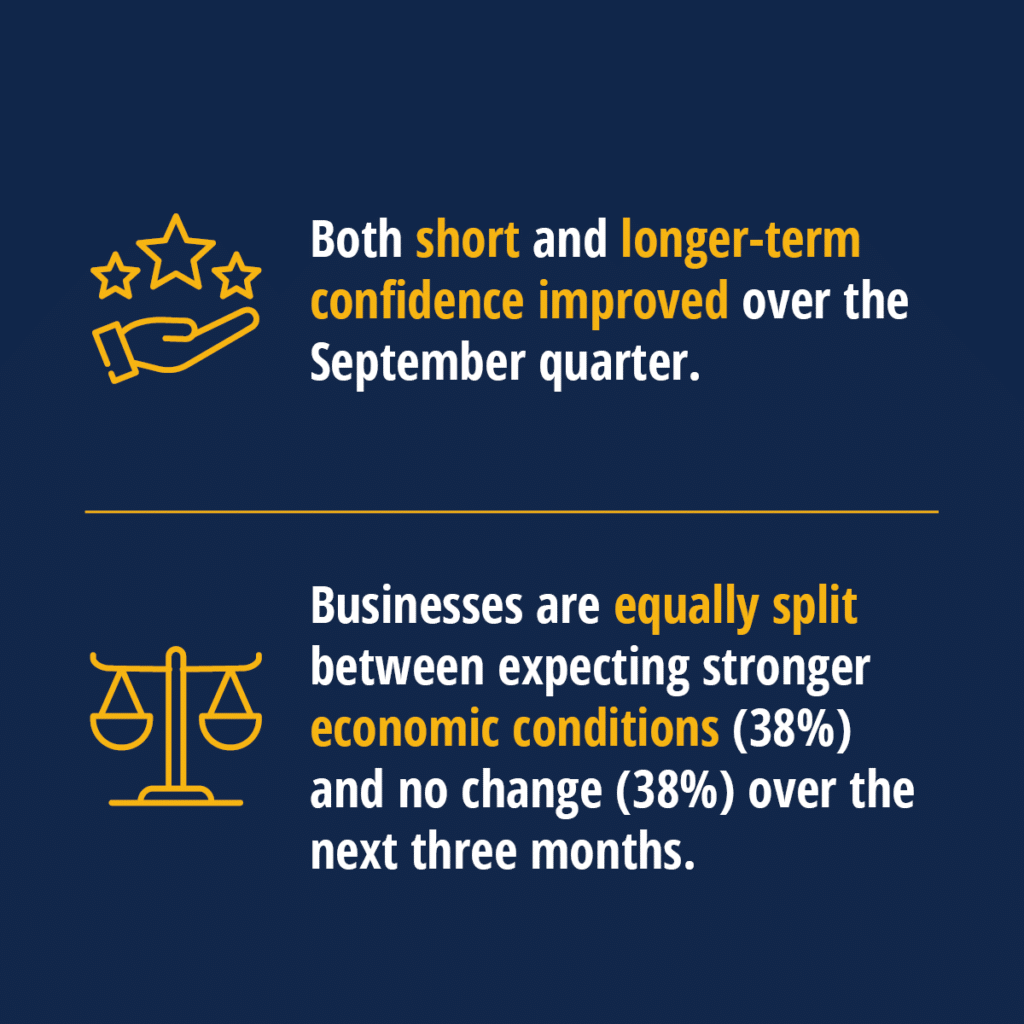
Western Australian business confidence improved in the September quarter, reversing much of the sharp decline recorded in June. Short-term confidence rose by 9%, approaching its March 2026 level. Long-term confidence increased by 12%, although it remains below 2018 levels.
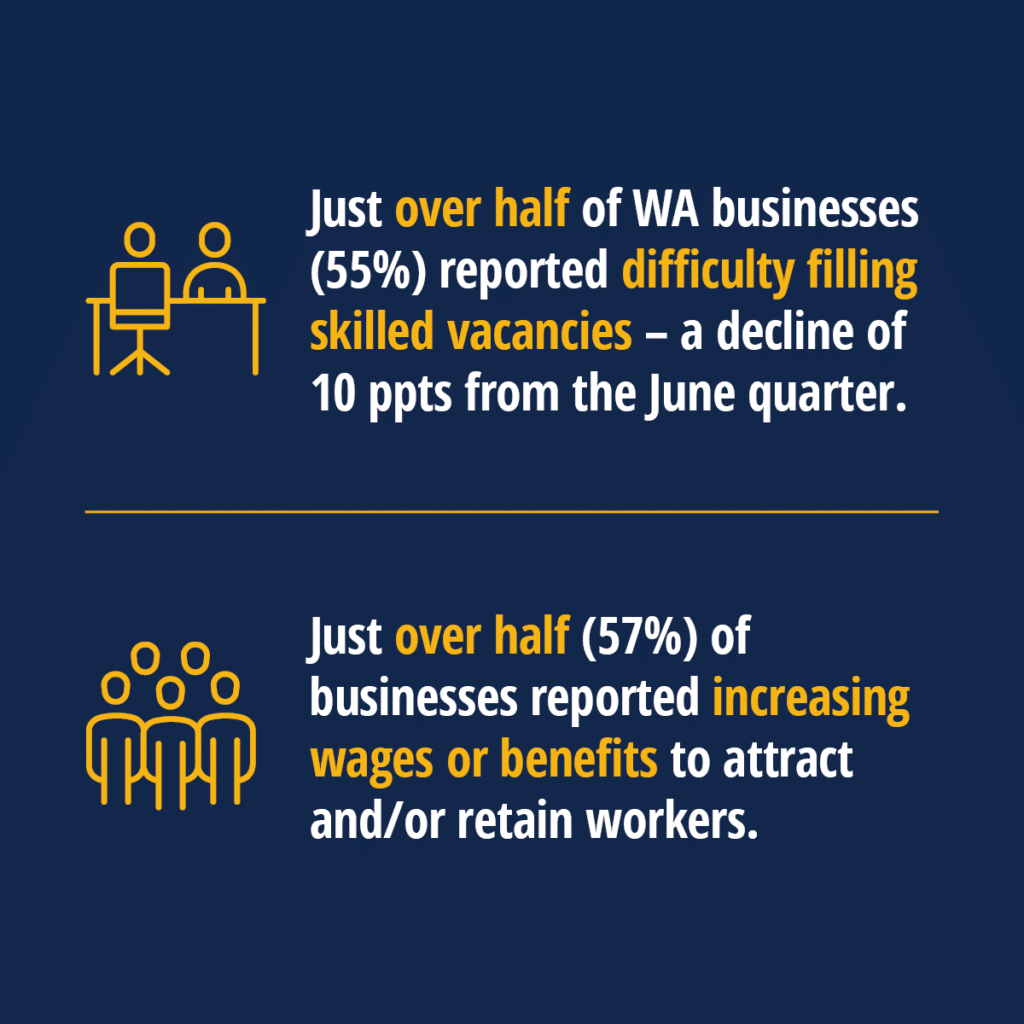
The recovery in confidence comes despite businesses continuing to face significant operating pressures. Rising costs remain the most widespread barrier to growth, reported by a record 80% of businesses, while labour shortages, regulatory and compliance requirements, and supply chain disruptions continue to constrain activity.
Weak demand has also re-emerged as a more prominent concern, replacing worker housing shortages among the five most commonly reported barriers to business growth.
This edition of CCIWA’s Business Confidence Survey examines the factors shaping the September-quarter recovery, alongside business investment intentions, cost pressures and the strategies WA employers are using to attract and retain workers.


CCIWA members (Complete membership and above) can download the latest business confidence report here. If you’re interested in becoming a member, please view our range of Membership Packages that have been created to connect you to the resources and people you need to be successful.
If you’re interested in upgrading your membership, please reach out to our membership team on [email protected] or 1300 422 492.
All Membership Packages include unlimited Business Toolbox access.
Already a member? Login
The first of its kind in the State, the CCIWA Consumer Confidence Survey provides valuable insights into the attitudes, expectations and financial circumstances of Western Australian consumers. Analysis includes:
Western Australian consumer confidence continued to recover from the historic lows recorded during the March quarter following the onset of the Middle East conflict. While sentiment improved again this quarter, households continue to face significant cost-of-living pressures, elevated interest rates and uncertainty surrounding the global economic outlook.
The Short-Term Consumer Confidence Index increased by 4% over the quarter. More than half of consumers (53%) expect economic conditions to remain steady over the next three months, while the share expecting conditions to worsen fell by five ppts to 33%. The remaining 14% expect conditions to improve.
Longer-term expectations also strengthened, although sentiment remains subdued. Two in five consumers (40%) expect economic conditions to remain unchanged over the next 12 months, while 38% expect conditions to weaken – an improvement of nine ppts from the previous quarter. The remaining 22% expect conditions to improve.
Cost of living remains the dominant concern for Western Australian households, with eight in 10 consumers (80%) reporting that living costs are weighing on their confidence. Global economic developments were the second-most cited concern, reported by 64% of consumers, while 60% identified uncertainty around future interest rate increases as weighing on their outlook. Consumers’ assessments of their personal finances and employment prospects also improved over the quarter, although both continue to constrain overall confidence.
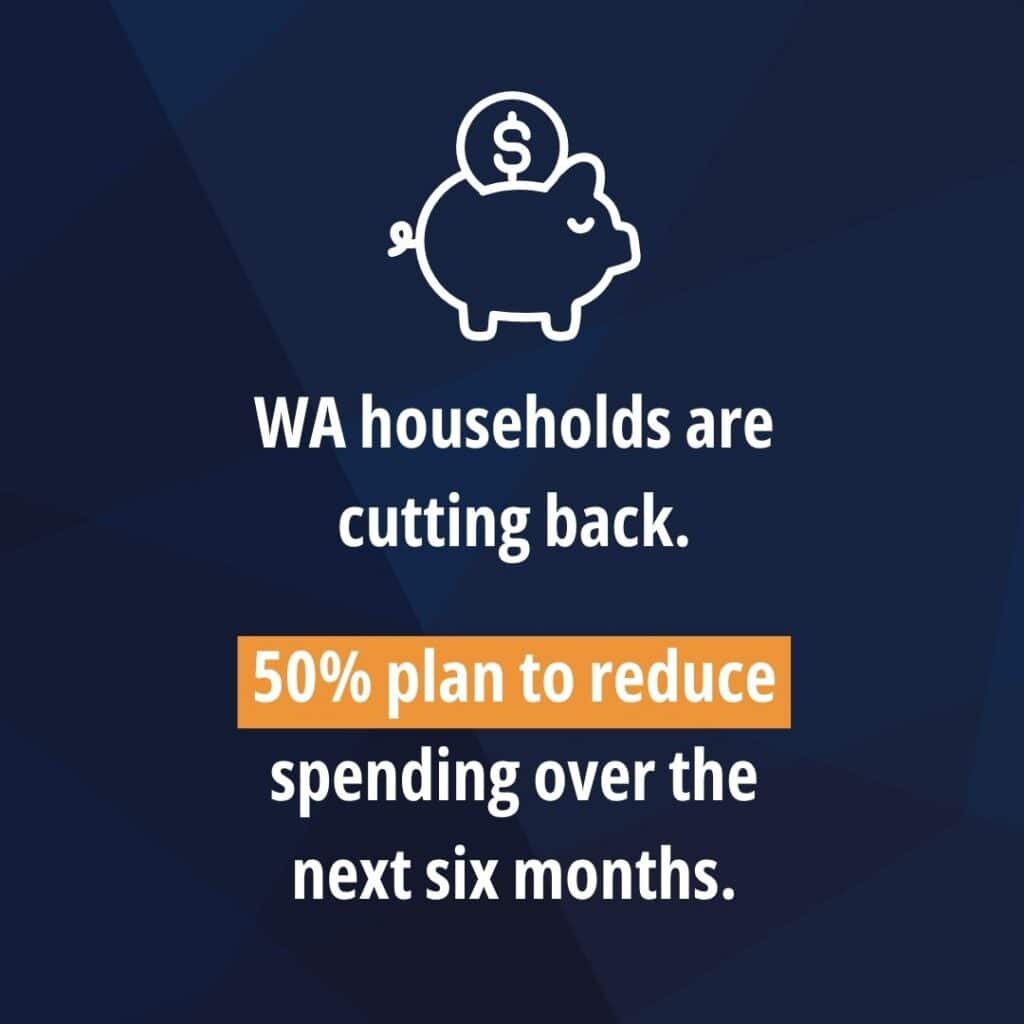
This edition of the CCIWA Consumer Confidence Survey also examines how Western Australians expect to adjust their spending over the next six months. The results point to continued household caution, with around half of consumers planning to reduce discretionary expenditure, particularly on cafés and restaurants, consumer goods, recreation and hospitality.


CCIWA members (Complete tier and above) can download the latest consumer confidence report here. If you’re interested in becoming a member, please view our range of Membership Packages that have been created to connect you to the resources and people you need to be successful.
If you’re interested in upgrading your membership, please reach out to our membership team on [email protected] or 1300 422 492.
All Membership Packages include unlimited Business Toolbox access.
Already a member? Login
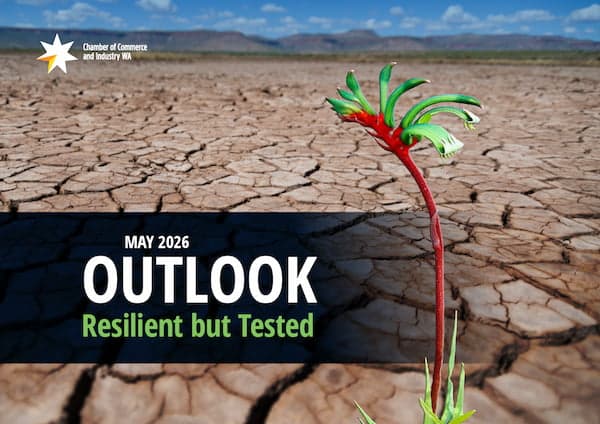
Outlook is a biannual CCIWA publication that provides expert forward-looking economic analysis. It contains:
Produced by our well-informed and market-conscious economics team, Outlook makes sure you stay ahead of the current and expected changes in economic conditions.
For further information, please contact [email protected]
Global economic conditions have shifted once again as conflict in the Middle East reintroduces uncertainty into energy markets, trade routes and supply chains. While initial concern focused on oil prices and disruptions around the Strait of Hormuz, the effects extend much further – with freight costs, fuel prices and key inputs such as fertiliser beginning to create new pressures for businesses and households. For Western Australia, these risks arrive at a time when cost pressures remain elevated and confidence is slowing. While the economy has shown resilience to recent global shocks, the path ahead is becoming increasingly complex. In an environment where geopolitical events are carrying greater economic consequences, the key question is whether these pressures prove temporary, or signal a more persistent shift in the economic outlook.
CCIWA members (Complete tier and above) can download the latest outlook report here. If you’re interested in becoming a member, please view our range of Membership Packages that have been created to connect you to the resources and people you need to be successful.
If you’re interested in upgrading your membership, please reach out to our membership team on [email protected] or 1300 422 492.
All Membership Packages include unlimited Business Toolbox access.
Already a member? Login
Western Australia’s regions play a vital role in the state’s economy, supporting major export industries including resources, agriculture and tourism.
Regional Pulse presents key insights from the CCIWA Business Confidence Survey, providing a clearer picture of the conditions facing businesses across WA’s regional centres. This special edition of Regional Pulse includes:
CCIWA’s quarterly Regional Pulse survey provides an important snapshot of the conditions facing businesses across regional Western Australia as the state entered this period of uncertainty.
While the June 2026 CCIWA Business Confidence Survey found business sentiment had declined, expectations for the next quarter are mixed. Almost two in five (39%) regional businesses expect economic conditions to weaken, while 37% expect no change.
Looking ahead, businesses are increasingly pessimistic about the economic outlook over the next 12 months. Nearly half (48%) of regional businesses are expecting weaker conditions – eight percentage points (ppts) higher than the Perth metro area. Around one third (30%) of businesses expect no change and just 21% expect stronger conditions.
Produced quarterly, our inflation update provides charts and tables on consumer price trends in Perth and all the capital cities.
Western Australia and the World
The release of CCIWA’s flagship Business Strategy report concludes a turbulent and fast-moving year for Australian businesses. The challenges that defined last year’s report—most notably inflation and operating in a high-cost environment—have given way to a new set of disruptive forces.
Where stability has traditionally underpinned growth, disruption to trade and technology is increasingly being used as a lever for geopolitical influence on the global stage. While this shift carries risk, it also presents new opportunities for Australian businesses prepared to adapt and respond.
Now more than ever, understanding current economic conditions, how they may evolve, and what this means for your business is essential. The objective of Business Strategy is to equip businesses with the insight and support needed to navigate the opportunities and challenges facing Western Australia as we move toward 2026. Central to this is the identification of practical, relevant and implementable strategic opportunities across key focus areas to help businesses stay ahead of the curve.
To achieve this, the report explores the global and local events and economic trends most likely to shape the business environment, alongside our expectations for the future. As many organisations turn their attention to strategic planning for the year ahead and beyond, we hope this report provides valuable context for what lies ahead.
Effective business strategy requires a strong understanding of the economic, political and social forces influencing the global, national and Western Australian operating environment. In this report, we explain in clear and accessible terms how current events and key economic trends are expected to impact business opportunities and risks in Western Australia, while outlining our outlook for the years ahead.
This report includes:
With this insight, businesses will be better equipped to make informed decisions and capitalise on the emerging economic trends shaping Western Australia’s future.
To upgrade your membership to Advantage or Corporate, please click here.
* Required
Subscribe to get all the latest WA and national business news and notices about our upcoming events delivered to your inbox.
Subscribe
The Chamber of Commerce and Industry WA (CCIWA) acknowledges the traditional custodians of Australia and their continuing connection to land, sea and community. We pay our respects to the people, the cultures and the elders past and present.