


Western Australia could be one step closer to restoring local oil refining capability, with governments backing a feasibility study into a proposed fuel refinery that could help shield the State from future global fuel shocks.

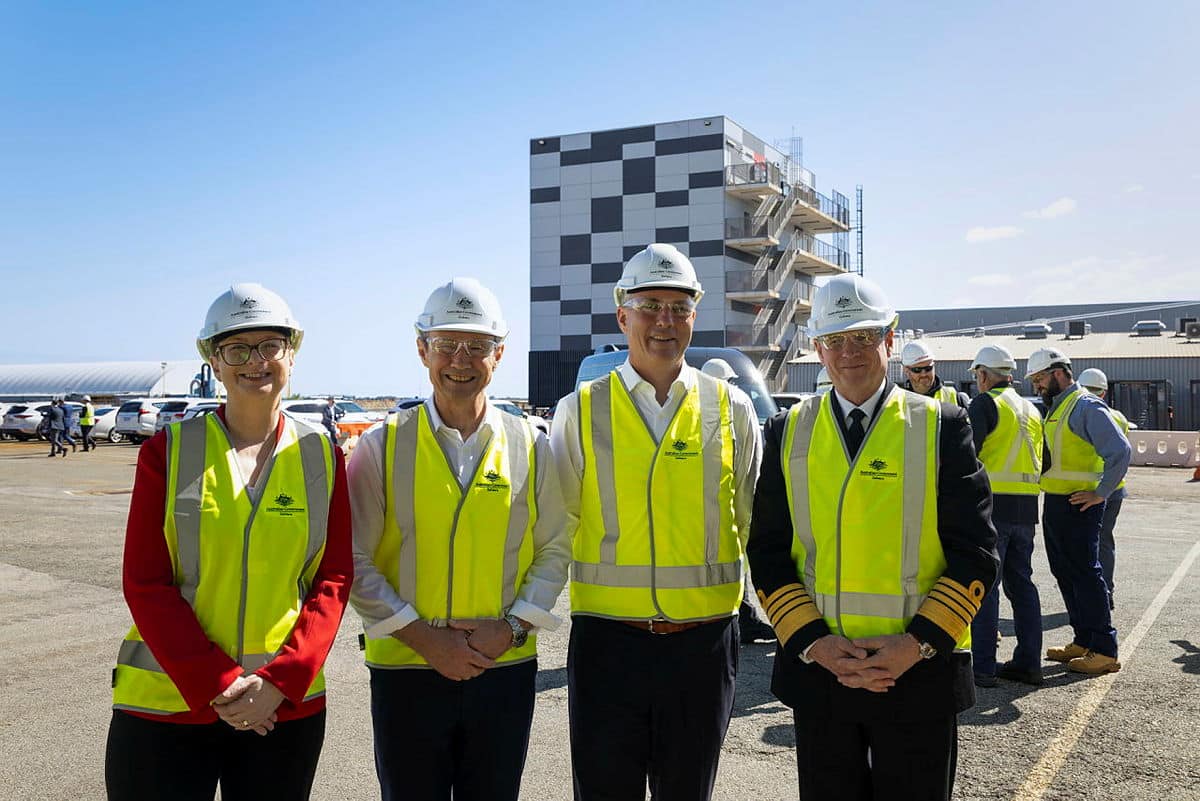
Prime Minister Anthony Albanese and WA Premier Roger Cook tour Perdaman’s Project Ceres in the Pilbara
If it goes ahead, the refinery would be the first new large-scale fuel refinery built in Australia since the 1960s and the third operating refinery in the country.
The State and Federal Governments have committed $4 million towards a pre-feasibility study and early engineering work for CCIWA Member Perdaman’s proposed Made in WA fuel refinery, a project designed to boost domestic fuel production and reduce reliance on imported refined fuels.
While the location hasn’t been finalised, Karratha has been earmarked as a strong contender. Perdaman is close to finishing its $6.45 billion Project Ceres urea plant, which is expected to become Australia’s largest domestic fertiliser production facility.
Fuel security concerns
The announcement comes as concerns over fuel security following the Middle East crisis and the corresponding supply shortages and higher prices.
CCIWA Chief Executive Officer Will Golsby said the conflict showed how vulnerable WA was to global supply chain disruptions.
“It’s absolutely vital that everything is on the table when it comes to establishing secure and sovereign oil refining capabilities,” he said.
“Any investment that ensures reliable and low-cost fuel will help keep WA moving. The Pilbara is the engine room of the State, and Perdaman is well placed to help redevelop local fuel processing supply chains.”
Perdaman Chairman Vikas Rambal said the proposed refinery reflected the company’s long-term vision for growing Australia’s industrial capability.
“This project will be a game-changer for Australia’s fuel security and manufacturing future,” he said.
“It represents a significant step towards rebuilding sovereign refining capability while creating jobs, attracting investment and supporting economic growth in Western Australia.”
Boost for local manufacturing and jobs
The feasibility studies will examine the optimal configuration for the refinery, as well as associated port, infrastructure and logistics needs.
WA’s economy relies heavily on access to secure and affordable fuel, particularly across mining, construction, transport, agriculture and regional industries.
“Aside from the cost shock we all felt at the bowser when the conflict broke out, there were very real concerns in regional WA and throughout our industries about fuel supply,” Golsby said.
“We are not out of the woods yet when it comes to either of those issues.
“As the world becomes more uncertain, it’s important that we take decisive action to protect our economy from future shocks.”
Prime Minister Anthony Albanese said strengthening domestic fuel capability would help Australia address future challenges while reducing exposure to global disruptions.
“The longer war in the Middle East goes on the greater the impact on Australia will be, and my government will continue to do everything we can to shield Australia from the worst effects and set us up for the future,” he said during his recent visit to Perdaman’s Project Ceres.
Golsby said the conversation should also consider alternative fuel sources, including biofuels, which were identified as a significant opportunity in CCIWA’s recent Powering WA’s Future energy transition report.
“Industry believes there’s huge potential in biofuels and WA is well positioned to capitalise on the demand for alternatives,” he said.
CCIWA is continuing to monitor how the fuel crisis is affecting WA businesses.
Go to our Middle East Crisis Hub for services and support.