


Western Australia’s next export story could be not only what it digs up and ships out but what it knows, according to former Woodside CEO Peter Coleman.

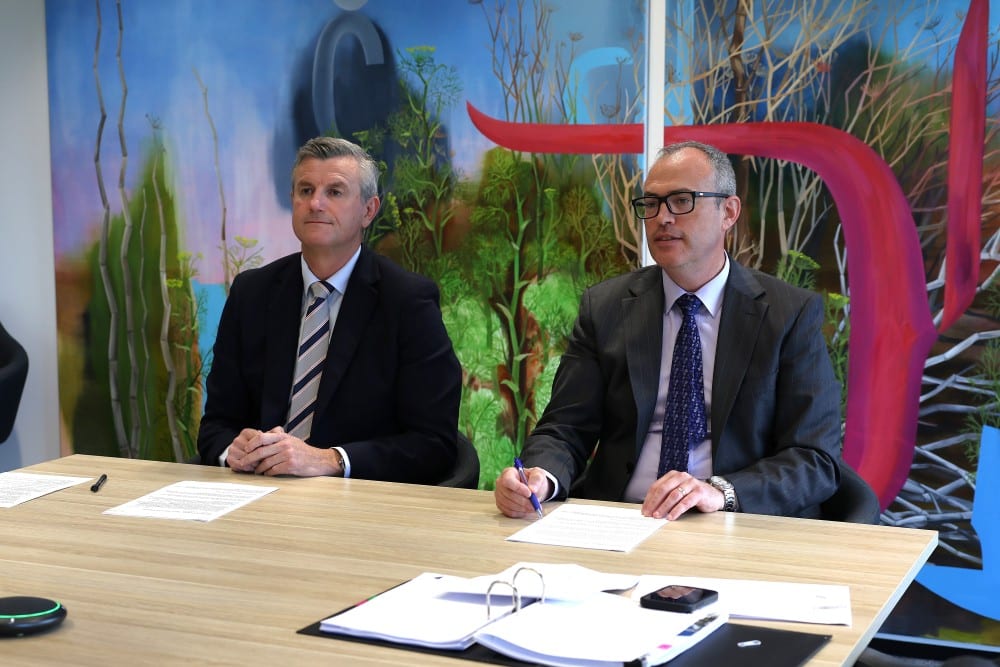
Former Woodside CEO Peter Coleman. Images: supplied
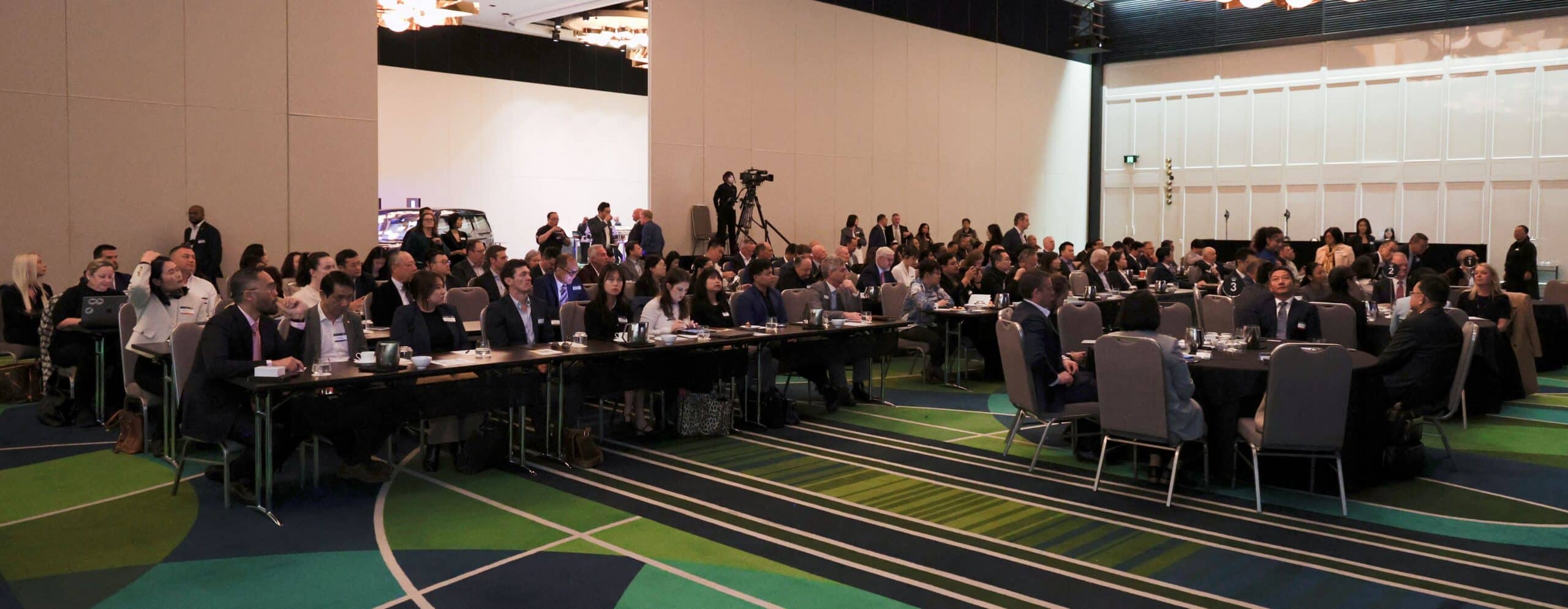
Speaking at the WA-Asia Business Forum, hosted by the WA Chinese Chamber of Commerce in Perth on August 4, Coleman said the State should leverage its deep expertise in resources, infrastructure and energy transition knowledge into services for Asian economies.
“We usually ask, how much more can we sell to Asia? I want to ask, what else could we be selling?” he said.
“Asia is not just one of WA’s markets, Asia is our market.”
WA’s three largest export markets, China 52%, Japan 10% and South Korea 7%, account for nearly 70% of the State’s goods exports, according to the State Government’s May 2026 Trade Profile.
However, the export mix is heavily concentrated, with metals accounting for three-quarters of exports (dominated by iron ore) and energy, about one-fifth.
WA must compete for capital
Coleman, now a business consultant, said diversification was about more than simply processing minerals locally. To remain competitive, WA must attract international capital while finding new ways to export its expertise, he said.
“The question is can we stay competitive enough to attract new capital the energy transition needs,” he said.
“Every dollar that does arrive here has chosen us over North America, Africa, or a dozen other places that would also like it,” he said.
“That’s not a complaint. It’s a competitive position and it has to be won in each cycle.
“Capital has not lost interest in WA. Simply, we have too little for it to buy and develop.”
While WA’s iron ore and LNG industries were attractive to investors, Coleman said most major assets were already established. In contrast, there were relatively few energy transition projects of the scale needed to attract global capital.
Foreign investors need “urgent clarity” from the Federal Government’s to encourage more exploration, innovation and new projects.
“Foreign capital cannot act in a vacuum of uncertainty and will simply be deployed elsewhere in the world,” Coleman said.
“It’s not the investment that you see goes; it’s the investment that you never know about, which is generally 10 times the projects that you see go.”
Projects must outlast policy support
Long-term projects also needed to remain viable across successive political and policy cycles, Coleman said.
While many Australian policy cycles ran for about five years, major investments generally operated for 20 or 30 years.
“Test any new industry against the capital cycle, not the political cycle,” he said.
“If the business case only works while the support lasts, we’ve really not built anything yet.”
Coleman acknowledged that while subsidies could help initially, it did not guarantee long-term survival. WA’s downstream processing capability ambitions would test this, he said.
“The further downstream you go, the lower the returns. It attracts a different type of investor,” Coleman said.
Rather than focusing on the viability of downstream processing, WA needed to decide what must change in energy costs, capital availability, infrastructure and scale – and who was prepared to support those conditions for 30 years.
Exporting the systems behind WA’s success
WA’s main grid sourced 52.4% of its electricity from renewables during the December 2025 quarter, according to the Australian Energy Market Operator.
It’s a feat Coleman commended, saying it has opened the door for a new trade opportunity.
“We’ve spent 60 years selling Asia what we extract. We could also sell how we did it,” he said.
“The coordination model behind the transition is real intellectual property, and is directly relevant to countries – [particularly Vietnam, Thailand and Indonesia] – managing the same shift inside the same kind of institutions.”
Other exportable capabilities included remote medicine, engineering, resource-project management, contract enforcement and land-tenure systems.
“We have skills and capabilities in this State that our neighbours need,” Coleman said.
“Neither of those is a commodity; both we already know how to do and neither runs out.”
If you are looking for support or advice in business, investment or trade, contact our experienced International Trade Services team at [email protected] or call 08 9365 7620.